
Mitochondrial DNA replication dynamics
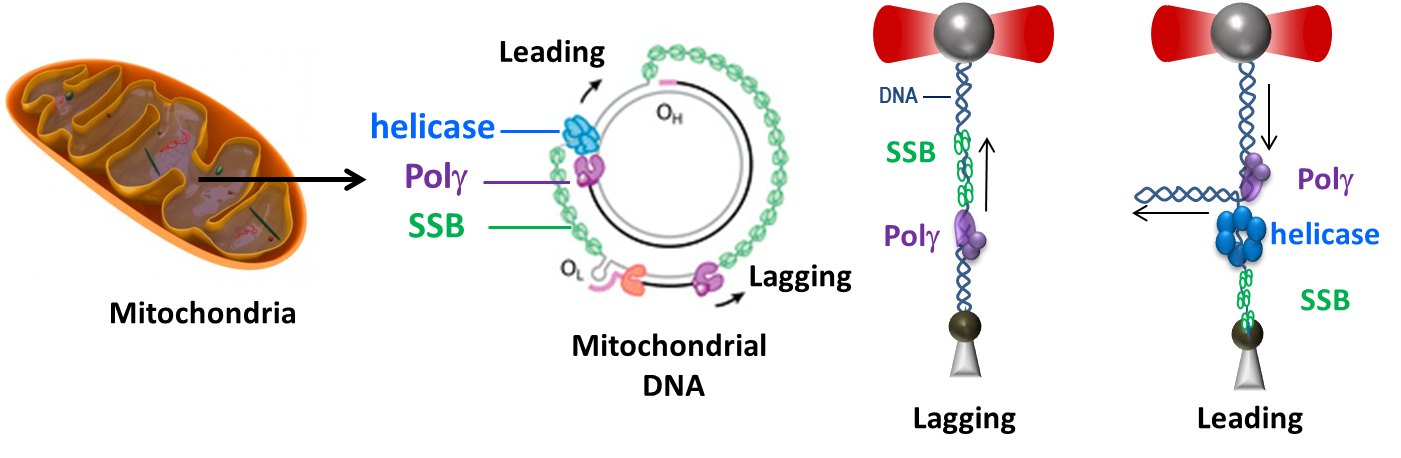
Mitochondria are the energy-producing organelle in animals, and mitochondrial function impacts nearly every aspect of cellular function, being critical for life. A full understanding of the mitochondrial function is in need of in-depth characterization of the mechanochemical processes that govern the operation of the molecular motors involved in the replication of the mitochondrial DNA. In collaboration with the lab of Dr. Greg Ciesielski (University of North Florida), we are combining biochemistry, molecular biology, and single-molecule biophysics involving optical tweezers, to study the dynamics and mechanochemical principles responsible for the activity of the proteins involved in the replication of the human mitochondrial DNA. The long-term objective of our research is the elucidation of the mechanism of DNA replication in animal mitochondria, and its relationship to mitochondrial mutagenesis and human disease.
Check out our works on this field:
Auto-regulation of the real-time kinetics of the human mitochondrial replicative helicase
Mechanism of strand displacement DNA synthesys by the coordinated activities of human mitochondrial DNA polymerase and SSB
- Replicative DNA polymerases promote active displacement of SSB proteins during lagging strand synthesis
- DNA synthesis determines the binding mode of the human mitochondrial single-stranded DNA-binding protein
- Mechanics, thermodynamics, and kinetics of ligand binding to biopolymers


